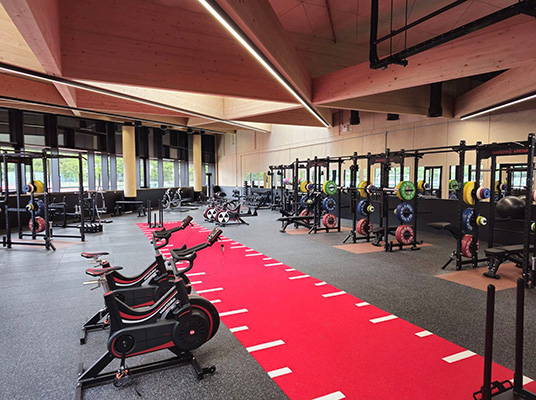
Whilst relatively modest in size, the Strength & Conditioning Gym provided an excellent opportunity to encourage new knowledge and insight into the use of low carbon construction materials. The OCMA led Integrated Design Team worked together with the client from the project outset with the aim of reducing embodied carbon in the construction of the gym expansion. The new Squad Gym has demonstrated that utilizing sustainable technologies and construction materials can deliver hugely positive results to the built environment and beyond.
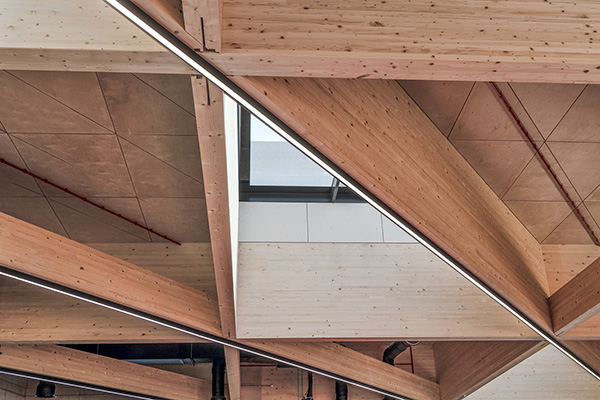
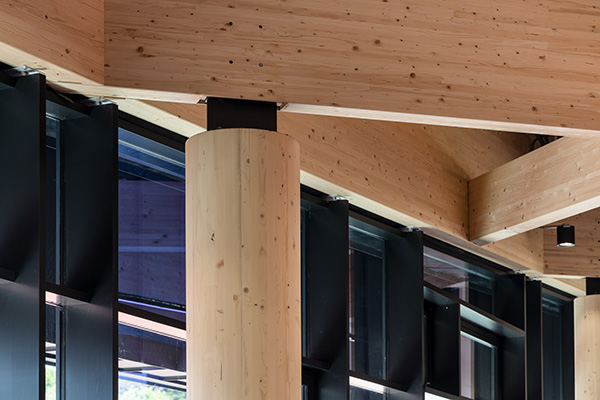
The client’s project brief was clear in that the aim for the project was to provide a design that delivers near zero carbon in construction and operation, in so far as practical within the context of the budget and site constraints. A system of Cross Laminated Timber (CLT) walls with Glulam beams was decided on as it had the most impact on reducing the carbon footprint associated with the proposal. It was however necessary to change the form of construction to mass concrete at the base of the walls for the purposes of flood protection. Studies indicate a 50% reduction in the embodied carbon compared to standard practice and the gym achieves the goals in 2023 the RIAI have set out to aim for by 2030.
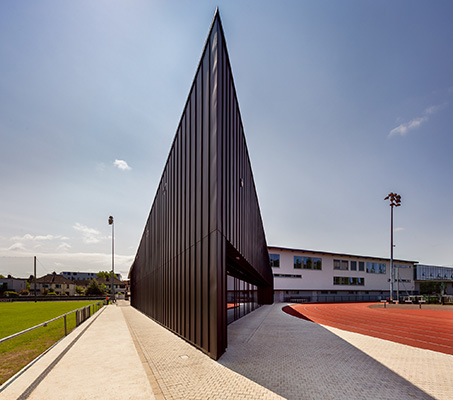
The design took advantage of the triangular site to create a strong geometric form. The sloped triangular building is connected back to the existing gym with a simple flat roofed glazed link and it is punctuated by 3 large triangular roof lights which flood the new facility with natural light. The timber structure and lining provide an uplifting interior which enhances a further sense of wellbeing in what is already a building centred on human health. Whilst the construction necessitated the removal of 2 trees, part of the project included the planting of 5 trees resulting in a biodiversity nett gain.
LocationCork
ClientUniversity College Cork
ServiceArchitecture and Integrated Design team lead
Area400m2
Value€2.1 million
StatusCompleted 2023
PerformanceA rated. Meets RIAI climate action 2030 target reduction for embodied carbon.